GEO 13400-60B01 Metro Tbi Throttle Body 89-94 1.0L
fits model: E24, Swift. make: Suzuki. year: 1993.
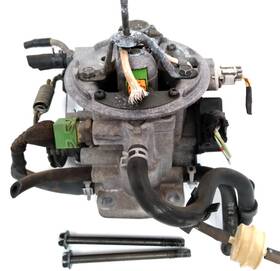
( Brand: Geo ), ( Manufacturer Part Number: 13400-60B01 ), ( Type: Throttle Body ), ( Material: Aluminum, Stainless Steel ), ( Universal Fitment: No ), ( Vintage Part: Yes ), ( Fuel Type: Gasoline )
Review GEO 89-94 Metro Suzuki 1.0l Tbi Throttle Body 1.0 Oem fits SWIFT E24 1993
The **GEO 13400-60B01 Throttle Body** is a meticulously engineered component designed specifically for the **1993 1994 Suzuki Swift (89 94 model years) and its GEO Metro counterpart**, both powered by the **1.0L TBI (Throttle Body Injection) E24 engine**. This throttle body is a direct replacement for the original factory unit, ensuring a perfect fit and seamless integration into the vehicle s fuel delivery system. Crafted with precision, it features a robust **plastic housing** reinforced with durable internal components, including a **high-quality throttle valve** and **smooth-operating linkage**, which work in tandem to regulate airflow and optimize engine performance. The design incorporates a **clean, unobstructed passage** for air intake, minimizing turbulence and maximizing efficiency, while the **O-ring seals** ensure a tight, leak-free connection to the intake manifold, preventing vacuum loss and maintaining optimal engine function. Ideal for both restoration projects and routine maintenance, this throttle body is built to withstand the demands of daily driving, offering reliable operation and consistent throttle response. Whether you're restoring a classic Metro or Swift to its original glory or simply upgrading an aging engine, this GEO-specific throttle body delivers the performance and durability expected from a high-quality aftermarket part.
### **Pros and Cons of Buying a 1993 1994 Suzuki Swift 1.0L TBI (E24) with GEO Metro Badging**
#### **Pros**
1. **Affordability** These cars are inexpensive to purchase, often under $2,000 $4,000 in good condition, making them a budget-friendly option for beginners or those needing a reliable second car.
2. **Simple and Reliable Engine** The 1.0L TBI (Throttle Body Injection) engine (E24) is a basic, fuel-efficient inline-four that is known for longevity if maintained properly. Many examples run well past 200,000 miles with basic care.
3. **Low Running Costs** Fuel economy is decent for its time (around 28 32 MPG combined), and parts are cheap. Oil changes, spark plugs, and basic maintenance are inexpensive compared to modern cars.
4. **Easy to Work On** The engine and drivetrain are straightforward, with plenty of aftermarket support. DIY repairs (oil changes, brake jobs, basic electrical fixes) are manageable for those with minimal mechanical experience.
5. **Small and Maneuverable** The compact size makes parking and city driving easy, and the lightweight body improves fuel efficiency and handling.
6. **Strong Aftermarket Community** Parts like carburetors, distributors, and even TBI kits are widely available. Tuning options (like aftermarket ECUs or throttle bodies) can improve performance if desired.
7. **No Major Electronics Issues** Unlike later TBI or later fuel-injected models, these cars lack complex computer systems, reducing the risk of expensive diagnostic or repair headaches.
8. **Good for Learning** Ideal for someone learning about basic engine mechanics, carburetion, and manual transmission systems.
---
#### **Cons**
1. **Outdated Safety Features** No ABS, no airbags (or only optional passenger airbags in later models), and weak structural integrity make these cars unsafe in collisions compared to modern standards.
2. **Poor Crash Protection** The body is lightweight and lacks modern safety reinforcements, increasing injury risk in accidents.
3. **Rust Concerns** Many examples suffer from rust in the floor pans, wheel wells, and suspension components, especially if they were driven in snowy or salty climates. A thorough inspection is critical.
4. **Reliability Depends on Maintenance** Neglected examples can fail due to worn belts, rods, or valves. The TBI system is prone to carbon buildup, leading to rough idling or poor performance if not maintained.
5. **No Catalytic Converter (Pre-1996)** Some early models lack a catalytic converter, which can lead to smog issues in states with emissions testing. Even if present, it may be worn out.
6. **Limited Power and Performance** The 1.0L engine produces only about 55 60 horsepower, making it slow and underpowered compared to modern cars. Acceleration and towing capacity are weak.
7. **Manual Transmission Only (Most Common)** While manual transmissions are durable, they require more skill to drive efficiently, and clutch wear can be an issue in high-mileage examples.
8. **No Modern Comforts** Poor sound insulation, weak heating/AC systems, and basic interior materials make long drives uncomfortable.
9. **Parts Availability Declining** While still available, some original parts (like specific belts, hoses, or body panels) may become harder to find over time.
10. **Resale Value is Zero** These cars are not collector items and lose value quickly. If you plan to sell later, expect minimal return on investment.
---
### **Conclusion**
The **1993 1994 Suzuki Swift 1.0L TBI (with GEO Metro badging)** is a **great choice for someone who:**- Needs a **cheap, simple, and easy-to-repair** car for daily use or learning mechanics.
- Drives **short distances** and prioritizes **low running costs** over performance.
- Is willing to **inspect for rust and maintenance history** before purchasing.
- Doesn t need **modern safety or comfort features**.
However, it is **not ideal for:**- **Safety-conscious buyers** (due to lack of airbags and weak structure).
- Those who want **reliability without maintenance** (neglected examples can be unreliable).
- People who need **power, speed, or modern amenities**.
- Buyers in areas with **strict emissions laws** (if the car lacks a catalytic converter).
---
### **Recommendation**
If you find a **well-maintained example** (under 100,000 miles, with a clean title, no major rust, and a history of oil changes), this car can be a **fantastic project or daily driver** for someone on a tight budget. Focus on:
- **Inspecting the engine bay** for leaks, carbon buildup, and rod knock.
- **Checking the transmission** (manuals are durable but may need clutch work).
- **Testing the electrical system** (fuses, distributor, and basic wiring).
- **Ensuring no major rust** (especially in the subframe and wheel wells).
**Best for:** Beginners, DIYers, or those who want a **low-cost, easy-to-fix** car for basic transportation.
**Avoid if:** You prioritize safety, modern features, or plan to keep it long-term without heavy maintenance.
Would you like guidance on specific maintenance tips or what to look for during a test drive?
Details:
Includes partial wiring and some hardware, Ready to ship. Its untested and may need serviced. Hello, here is a throttle body recently removed from 1991 Geo Metro.
part #: 1340060b01 price
- $158.50
specifications throobo:
- for models: E24, Swift
- for makes: Suzuki
- for years: 1993
- brand: Geo
- mpn: 13400-60b01
- type: Throttle Body
- material: Aluminum, Stainless Steel
- universal fitment: No
- vintage part: Yes
- fuel type: Gasoline
general throobo:
- condition: For parts or not working
- Car Truck Parts Accessories > Air Fuel Delivery > Throttle Bodies
payments throobo:
- wallet: Apple-pay
- other
- credit card: Diners-club
shipping throobo:
- transit: 4-9 Days
- class: Standard, Expedited
- carrier: USPS
- service: USPS Ground Advantage, USPS Priority Mail
- type: Fixed
- cost: $14.82
seller throobo:
- # reviews: 8885
- city: Canton, Ohio
- rating: 99.8%
offer throobo:
- availability: In Stock
- sold: 0
- best offers: True
- started: February 10, 2026
- quantity: 1
- options: Ship-to-home
returns throobo:
- paid by: Seller
- policy: Returns Accepted
- time: 30 Days
Geo 13400-60B01 Is Similar To:
- 13400-50g11 Geo Metro Lsi Throttle Body (52.1% similar) Shipping outside the us is available upon request. All shipping covers the lower 48 states only...(May 12th, 2018)
- 179950-0260 Denso Geo Metro Oem Throttle Position Sensor (33.8% similar) Only couple of them are listed on. If you are not comfortable with that. Came from wrecked Geo metro but sold as is to avoid scammers. I am selling sold as is rare find...(June 24th, 2018)
- 18117-86b00 Suzuki Geo 1989 1990 (32.1% similar) This high pressure line is hard to get and no long available at the dealer. Shipping handling to Canada is view all photos carefully confirm everything exactly the same as one you are replacing. This came from a speed manual tracker with low miles. Shipping handling is free to all us. If an ...(May 30th, 2017)
- 96065252 Suzuki New Geo Metro (27.5% similar) These are not stock photos. Untitled throttle body this is a brand new, genuine gm oem, for the 1991 Geo metro, Pontiac firefly Chevy sprint convertibles. The suzuki oem part number is 60B11. See below for gm product notes. Oem part numbers are given so you can verify that this is correct for your...(September 8th, 2017)
- 96067860 Acdelco Geo Metro Throttle Body Genuine Oem Ac Delco (41.1% similar) These are not stock photos. Oem part numbers are given so you can verify that this is correct for your application. Untitled Geo metro throttle body this is a brand new, genuine gm oem, for. This tbi may also work for the suzuki Keri swift...(May 29th, 2018)
- 13420-50g00 Oem Chevy Geo Metro Cyl Throttle Body Tps Sensor Factory (47.3% similar) And, on another side of the throttle body it is labeled: 003B. This 1995 Chevy Chevrolet Geo metro throttle body throttle body taps position sensor 50G00 1342050G00 can be used as a carburetor carburetor, air intake fuel delivery, gas control switch tbi injection emission system replacement part. ...(November 24th, 2019)
- Geo 13400-60e50 Fuel Injection Throttle Body Injector Tbi For 92-93 Metro Firefly 1.0l Mt (42.6% similar) Sincerely, Patrick and Michael CARE. For contact info, just search for us online. 92-93 Pontiac FIREFLY.1.0L, m/t, ls. Small isn't bad. Up for sale is a good used fuel injection throttle body injector tbi 92-93 Geo metro firefly 1.0L mt. Fitment data: our fitment data is guaranteed. This part may ...(October 8th, 2024)
- Geo 337-60100 Throttle Valve Body For 95-97 Metro 1.3 (40.6% similar) Metro 98-00 throttle body assembly; 1.0L, 3 cylinder. Fitment type: firefly 95-00 throttle body assembly; 1.0L, 3 cylinder. Please replace such items as required for proper installation. Metro 95-97 throttle body assembly...(October 10th, 2024)
- Geo 13400-50g00 1992-1994 Metro Throttle Body Firefly 1.0l Assembly Oem 92 93 94 Manual Mt (58.8% similar) When considering purchasing a product for different year or model than what is recommended by the manufacturer, it crucial to conduct thorough research on compatibility ensure will function correctly with your specific vehicle. Pulled from a 1994 metro, with the 1.0L, manual transmission. Actual ...(November 5th, 2024)
- Chevrolet 91172108 1995-2000 Geo Metro 1.0 Throttle Body Tbi Fuel Injection (49% similar) Fits the following model's: metro 95-97 throttle body assembly; 98-00 1.0L, 3 cylinder...(December 17th, 2024)
- Oem 13400-60b51 89-94 Geo Metro Suzuki Swift Tbi Throttle Body 1.0l 1.3l 90 91 92 93 (75.6% similar) 100% working. Removed from a 1991 Geo metro m/t. 30 day warranty. Let's make this simple. Whl-, picture of the actual item for sale. This unit is in good condition guaranteed. 1989 -1994 Geo metro / suzuki swift. Match your original unit with our pictures or numbers to ensure compatibility...(April 3rd, 2025)