BMW 1433441 Throttle Body 434 414
fits model: 323i, 328i, 528i. make: Bmw. year: 1999–2000.
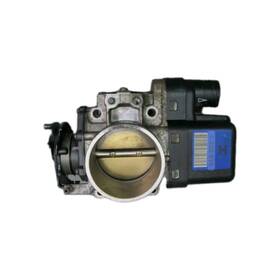
( Manufacturer Part Number: 1433441 ), ( Fitment Type: Direct Replacement ), ( Color: Blue ), ( Mounting Hardware Included: No ), ( Material: Oem ), ( Type: Throttle Body ), ( Manufacturer Warranty: 1 Month ), ( Country Of Origin: Germany )
Review BMW Throttle Body 434 414 fits 323I 328I 528I 1999–2000
The **BMW 323i, 328i, and 528i (1999 2000 models)** throttle bodies, specifically part numbers **BMW 1433441 (434 mm)** and **BMW 323441 (414 mm)**, are critical components of the engine s intake system, directly influencing performance, throttle response, and overall drivability. These throttle bodies are designed to regulate airflow into the engine by controlling the opening and closing of the throttle valve, which adjusts the mixture of air and fuel entering the combustion chambers. The **434 mm** model is engineered for the **E46 328i and 528i**, featuring a larger bore diameter to accommodate the increased displacement and power output of these higher-performance variants, while the **414 mm** version is tailored for the **323i**, balancing efficiency with the slightly lower power requirements of its inline-six engine. Both throttle bodies are crafted from high-quality materials, including durable plastic and metal components, to withstand the demands of daily driving and occasional spirited acceleration. The internal design incorporates a precise throttle blade mechanism, often paired with a **Bosch or Siemens** throttle position sensor (TPS) and a **throttle actuator motor** (TAM) in later models, ensuring seamless integration with the engine control unit (ECU) for optimal fuel delivery and ignition timing. Over time, carbon buildup, wear on the throttle blade, or sensor degradation can lead to rough idling, sluggish acceleration, or even check engine lights, making these throttle bodies essential candidates for maintenance or replacement when performance begins to degrade. Whether restoring a classic E46 to its original glory or upgrading an older vehicle for improved throttle response, these throttle bodies serve as a foundational element in maintaining the engine s efficiency and responsiveness. Proper installation, often requiring recalibration of the ECU or replacement of the TPS, ensures that the throttle body operates at peak performance, delivering the smooth, linear power delivery that BMW enthusiasts expect from these iconic models.
### **Pros and Cons of Buying a 1999-2000 BMW E36 (323i, 328i, 528i) with a Throttle Body (TB) 434 or 414**
#### **Overview**
The 1999-2000 BMW E36 (323i, 328i, 528i) is a classic compact sedan known for its driving dynamics, reliability, and aftermarket potential. However, the **throttle body (TB) 434 or 414** commonly found in these models has significant drawbacks that must be carefully considered before purchasing.
---
### **Pros**
1. **Driving Enjoyment & Handling**
- The E36 is renowned for its precise steering, balanced chassis, and engaging driving experience, making it a favorite among enthusiasts.
- The 2.8L inline-6 (528i) and 2.5L inline-4 (323i/328i) engines produce smooth power delivery, especially when properly maintained.
- The manual transmission models (common in these years) offer a satisfying shift feel, appealing to gearheads.
2. **Aftermarket Support & Modifiability**
- The E36 has a vast aftermarket, including performance parts (intakes, exhausts, ECU tunes), making it relatively easy to improve power and drivability.
- Cosmetic upgrades (body kits, wheels, interior mods) are widely available and affordable.
- The engine bay is accessible, allowing for DIY maintenance and upgrades.
3. **Reliability (If Well-Maintained)**
- With proper care, the E36 s engines (especially the 2.8L M52 and 2.5L M43) can last well over 200,000 miles.
- The 5-speed manual transmissions are robust, while the 6-speed automatics (in 528i) are generally reliable if serviced.
- Suspension components (shocks, bushings) can be upgraded for better handling.
4. **Resale Value & Collectibility**
- Lower-end E36s (323i/328i) hold decent resale value, especially in good condition.
- Well-preserved examples with low miles can appreciate over time, particularly if restored to showroom condition.
- The 528i (with the 2.8L engine) is often considered the most desirable variant due to its power and refinement.
5. **Affordability (Compared to Modern Classics)**
- Prices for these models are generally reasonable, especially for those with higher mileage or minor issues.
- Parts and labor are cheaper than for newer BMWs, making repairs more accessible.
---
### **Cons**
1. **Throttle Body (TB) 434 or 414 Issues**
- **Rust & Failure:** The throttle body in these E36s is notorious for **rusting out internally**, leading to **sticking, erratic idle, or complete failure**. The TB is often the first component to fail in a neglected E36.
- **No Easy Replacement:** Unlike later BMWs, the TB in these models is **not easily accessible** without removing the intake manifold, which can be a labor-intensive job.
- **Common in 1999-2000 Models:** These years were particularly prone to TB failures due to **poor sealing and exposure to moisture** in the intake system.
- **Symptoms of a Bad TB:**- Rough idle
- Stalling
- Hesitation or poor acceleration
- Check Engine Light (often with P0120, P0121, P0122 codes)
- Visible rust or corrosion inside the TB
2. **Electrical & Sensor Problems**
- The E36 s **electronic fuel injection (EFI) system** relies on multiple sensors (MAF, IAT, crankshaft position, etc.), many of which **fail over time**.
- **Mass Air Flow (MAF) sensor** clogs frequently, causing rough running and poor fuel economy.
- **Oxygen sensors** degrade and may require frequent replacement.
- **ECU (Engine Control Unit) issues** can arise, sometimes requiring a full ECU replacement or reprogramming.
3. **Transmission Problems**
- **Manual Transmissions (5-speed):** Generally reliable but can develop **leakage at the bellhousing or synchronizer wear** if not maintained.
- **Automatic Transmissions (6-speed in 528i):** More prone to **fluid leaks, clutch failure, and solenoid issues**. The 528i s automatic is **notoriously weak** compared to the manual.
- **Clutch (Manual Models):** If the car has been driven hard, the clutch may need replacement, which is an expensive repair.
4. **Suspension & Steering Wear**
- **Shocks & Struts:** Often worn out by the time these cars reach 100,000 miles, leading to poor ride quality and handling.
- **Control Arm Bushings:** Commonly fail, causing clunking noises and uneven tire wear.
- **Power Steering:** The **hydraulic system** can leak, and the pump may fail, requiring a costly replacement.
- **Ball Joints & Tie Rods:** Often need replacement to prevent alignment issues and unsafe handling.
5. **Rust & Body Condition**
- Many E36s suffer from **rust in the wheel wells, rocker panels, and floor pans**, especially in snowy or humid climates.
- **Popped rivets** (common in the rear hatch and trunk) can lead to water leaks and further rust damage.
- **Paint & Interior Wear:** Older models often have **chipped paint, faded interiors, or worn seats**, adding to maintenance costs.
6. **Fuel System Issues**
- **Fuel Pump Failure:** The electric fuel pump can fail suddenly, causing the car to stall or not start.
- **Injector Fouling:** Carbon buildup in injectors is common, leading to **rough idle and poor performance**.
- **Fuel Filter Clogging:** The fuel filter can restrict flow, requiring frequent replacement.
7. **Cooling System Problems**
- **Water Pump Failure:** The water pump is often driven by the timing belt and **fails around the same time as the belt**, leading to engine overheating.
- **Thermostat & Radiator Issues:** The thermostat can stick open or closed, and the radiator may develop leaks.
- **Timing Belt & Tensioner:** If the timing belt hasn t been replaced (every **60,000 miles**), it **will fail catastrophically**, causing **valve damage** (on the 2.5L M43) or **catastrophic engine failure** (on the 2.8L M52).
8. **Exhaust & Emissions Issues**
- **Catalytic Converter Failure:** The 2.5L M43 engines are particularly prone to **cracked or clogged cats**, which can be expensive to replace.
- **EGR Valve & PCV Problems:** The EGR valve can clog, and the PCV system can fail, leading to **rough idle and poor emissions performance**.
- **O2 Sensor Failures:** Multiple sensors can fail, triggering check engine lights and reducing fuel efficiency.
9. **Interior & Comfort Wear**
- **Seats:** Often cracked or sagging, especially in the rear.
- **Gear Shift & Shifter:** The manual shifter can become stiff or worn.
- **Heater & A/C:** The **blower motor and A/C compressor** can fail, requiring costly repairs.
- **Electrical Gremlins:** Random **window regulators, door locks, or dashboard lights** can fail due to aging wiring.
10. **Maintenance Costs Add Up**
- While parts are cheap, **labor costs** (especially for suspension, transmission, and electrical work) can be high.
- **Specialty tools** (e.g., for removing the throttle body) may be required for repairs.
- **Insurance & Storage:** Older BMWs can be **expensive to insure**, and long-term storage may require additional costs (e.g., battery maintenance, rust prevention).
---
### **Key Considerations Before Buying**
1. **Throttle Body Condition (Most Critical Factor)**
- **Inspect the TB thoroughly.** If it s rusted or showing signs of failure, **budget for a replacement** (or find a car with a known-good TB).
- **Replacement cost:** $150 $300 for the part, plus labor ( $200 $400) if removing the intake manifold.
- **Alternative:** Some owners **modify the TB** (e.g., replacing the internal components) instead of full replacement.
2. **Service History**
- **Check if the timing belt has been replaced** (if not, do it immediately).
- **Verify transmission fluid changes** (especially for automatics).
- **Look for records of TB, MAF, and sensor replacements.**
3. **Test Drive & Mechanical Inspection**
- **Listen for unusual noises** (clunks, rattles, whines).
- **
Details:
30 day warranty. It is compatible with BMW engines and made in Germany, the home of brand. It comes with a 30-day manufacturer warranty and is made of OEM material surface finish that meets the highest standards quality. This blue label engine throttle body is a direct replacement for BMW 323I, 328I, and 528I model's manufactured between 1999 2000.
This item does not come with mounting hardware and is a modified or performance part. The throttle body is designed to control the air and fuel delivery engine, ensuring optimal performance reliability.
part #: 1433441 prices
- $199.99-$209.30
specifications throobo:
- for models: 323i, 328i, 528i
- for makes: Bmw
- for years: 1999-2000
- mpn: 1433441
- fitment type: Direct Replacement
- color: Blue
- mounting hardware included: No
- material: Oem
- type: Throttle Body
- manufacturer warranty: 1 Month
- country of origin: Germany
returns throobo:
- paid by: Buyer
- time: 30 Days
- policy: Returns Accepted
offer throobo:
- options: Ship-to-home
- started: March 22, 2026
- quantity: 1
- availability: In Stock
- sold: 0
general throobo:
- Car Truck Parts Accessories > Air Fuel Delivery > Throttle Bodies
- condition: Used
seller throobo:
- city: La Mesa, California
- # reviews: 2325
- rating: 98.8%
payments throobo:
- wallet: Google-pay
- credit card: Mastercard
- other
shipping throobo:
- type: Fixed
- carrier: USPS
- transit: 3-6 Days
- service: USPS Priority Mail
- cost: $9.99
- class: Expedited
Bmw 1433441 Is Similar To:
- 007623101 Hella New Bmw Throttle Body (35.1% similar) The price is as it states on. Standard shipping is sent via FedEx smart post which a 5-9 day economy service. 95 and is only available to the USA. Discounted shipping and combined is available on our web site. More detailed information is available in the compatibility's section above. Fitment ...(February 11th, 2017)
- 01-06 Bmw E46 M3 Throttle Body (46.7% similar) Is in working condition before pulled out. Please see detail picture. Parted out from a bmw E46 m3 2003 oem part see picture actual item on. These are used parts...(December 24th, 2016)
- 1 354 783 8300 Factory Bmw Throttle Actuator Pull Rod Individual Body Oem (33.1% similar) Fits bmw m3 these rods link the throttle body to individual set. Available is a throttle body actuator pull rod removed from an 2011 bmw M3. The rods are in great condition and ready for installation...(August 9th, 2018)
- 1 730 908 Bosch Bmw Eml Electronic Throttle Body (37% similar) Emil drive by wire. Bmw 735I 535I throttle body. 5 bmw throttle...(August 26th, 2018)
- 1 745 207.1 Bosch Bmw Eml Electronic Throttle Body Pair (36.5% similar) Bmw part number fast, free USPS priority shipping. Sale is for the pair both units which came from same engine. Guaranteed not to be DOA. Used electronic throttle bodies Emil for a bmw 750IL or 850I...(September 13th, 2018)
- 1270711 Bmw Throttle Body (40% similar) 5l M30 throttle body fully functional. Note: multiple options were available during these model years. All parts are tested on the car, then go through secondary bench testing whenever possible. All parts are tested prior to listing. Taken from a running 1987 bmw 635CSI. Mounting points are intact...(July 23rd, 2018)
- 1285330 Bosch Bmw Oem Throttle Housing Assembly Us Model (31% similar) What you see is get bmw E12 throttle body assembly off running car comes with both taps and some new hardware installed...(May 6th, 2018)
- 13 54 7 502 445 Vdo Bmw E36.7 E46 Throttle (29.4% similar) E46 330XI z3 7 E46 throttle housing assembly oem part fits: brand new with full 1 year warranty. Bmw part made by VD, oem 330I E46 330CI con. 0i save z4 z3 coupe on APR at 04:35:56 PDT. May get any for car want...(February 12th, 2017)
- 13-54-7-556-118-04 1354755611804 Bmw Throttle Body (30.9% similar) English, Spanish, Italian or Portuguese only. Extra fees may apply. Engines and transmission. All markings should be intact and no signs of physical damage such as hits, drops, water damage, or any tempering. Items must come in original packing to ensure their protection. Shipping free to most of ...(October 31st, 2017)
- 13 63 1 436 000 Bmw Throttle Position Switch Asc 019962727573 (38% similar) May get any for car want. Year model sub model body type chassis engine 318I qty: 318IS 318TI z3 brand new part with full 1 year warranty. Bmw part made by. If you are not sure about the part fitting your car, please e-mail us cars vain...(March 25th, 2018)
- 132 06009 076 Wd Express Fuel Injection Throttle Body Fits Bmw 884109826095 (38.5% similar) Always read item specifics and use compatibility guide. Some pictures show different angles of the same item. Central valley wholesale goods which has the largest selection of Victorians Swiss army knives and parts import car for European Asian cars. Every listing is for a quantity of 1, unless it ...(August 21st, 2018)