ACURA 16400PR4A52 Throttle Body Valve 337-59711
fits model: Integra. make: Acura. year: 1992–1993.
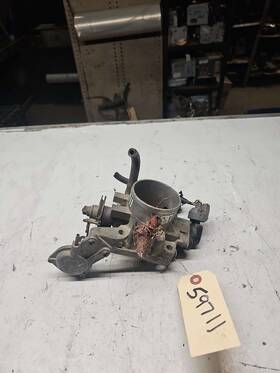
( Manufacturer Part Number: 16400PR4A52 ), ( Items Included: Throttle Valve ), ( Color: Silver ), ( Fuel Type: Gasoline ), ( Interchange: 337-59711 ), ( Type: Throttle Body ), ( Manufacturer Warranty: 1 Month ), ( Id: 69edda10-e727-4a54-bdb8-e7003fcf7177 ), ( Country Of Origin: Japan )
Review ACURA Throttle Body Valve Assembly fits INTEGRA 1992–1993
The **Acura 16400PR4A52 throttle body valve** from the **1992 1993 Honda Integra (DC5)** is a precision-engineered component designed to regulate airflow into the engine s intake system, ensuring optimal performance, throttle response, and fuel efficiency. This throttle body is part of the **1.6L D16Y7 engine family**, a legendary inline-four powerplant renowned for its balance of power, reliability, and tunability. The **16400PR4A52** model is a **mechanical throttle body** (as opposed to electronic), featuring a **plastic housing with a metal throttle plate assembly**, which is operated by the driver s pedal via a cable or linkage system. The valve itself is a **single-plate design**, allowing for smooth, progressive opening and closing as the driver presses the accelerator, which is critical for maintaining consistent engine performance under varying driving conditions.
Under the hood, this throttle body plays a pivotal role in the engine s **carbureted or early fuel-injected (EFI) operation**, depending on the specific model year and modifications. In stock form, it works in tandem with the **D16Y7 s dual-point distributor ignition** and **port fuel injection (PFI) system** (on later models), ensuring precise fuel-air mixture ratios for smooth acceleration, minimal hesitation, and efficient combustion. The **plastic body** is molded with precise tolerances to minimize air leaks, while the **metal throttle plate** is designed to withstand the mechanical stresses of daily driving, though it may require periodic cleaning or replacement if carbon buildup or wear occurs over time.
For enthusiasts looking to enhance their Integra s performance, this throttle body is a **common upgrade target**, especially when paired with **high-flow air intakes, performance cams, or forced induction setups**. The stock throttle body can become a restriction point as power levels increase, leading to **turbulent airflow, poor throttle response, or even stalling under aggressive driving conditions**. Replacing it with an **aftermarket high-flow unit** (such as those from **AEM, Holley, or Walbro**) can significantly improve airflow, allowing the engine to breathe better and respond more dynamically to throttle inputs. Additionally, the **16400PR4A52** is compatible with a variety of **performance modifications**, including **cold air intakes, superchargers, or turbochargers**, making it a versatile choice for both stock and modified applications.
When inspecting or servicing this throttle body, it s important to note its **mechanical nature**, which means it lacks the electronic sensors found in later models (such as the **1994 Integra s electronic throttle control**). This means adjustments must be made manually, either by **adjusting the throttle stop screw** for idle position or **replacing worn cables** if the pedal feel becomes sluggish. Over time, **carbon deposits** can accumulate on the throttle plate, restricting airflow and causing rough idling or stalling, which is why regular cleaning with **throttle body cleaner** (such as **Gumout or CRC**) is recommended. For those looking to restore their Integra to factory specifications or those seeking a **budget-friendly performance upgrade**, the **16400PR4A52 throttle body valve** remains a **critical yet often overlooked component** one that, when properly maintained or upgraded, can make a noticeable difference in drivability and power delivery. Whether used in a **restomod project, a daily driver, or a track-focused build**, this throttle body serves as a foundational element in achieving the **smooth, responsive, and efficient performance** that the D16Y7 engine is famous for.
### **Pros and Cons of Buying a 1992-1993 Acura Integra (1.6L 4A52) with a Throttle Body Valve Issue**
#### **Pros**
1. **Affordability** The 1992-1993 Acura Integra (based on the Honda Civic) is a budget-friendly used car, especially in its original condition. Parts and labor are relatively inexpensive compared to newer or luxury vehicles.
2. **Reliability (When Maintained)** The 1.6L 4A52 engine is a well-known, durable inline-four with a reputation for longevity if properly maintained. Many examples last well beyond 200,000 miles with basic upkeep.
3. **Simple Mechanics** The engine and drivetrain are straightforward, making repairs and modifications accessible for DIY enthusiasts. Common issues like the throttle body valve (often a vacuum leak or carbon buildup) are relatively easy to diagnose and fix.
4. **Mod Potential** The Integra is a popular platform for tuning, with aftermarket support for performance upgrades (turbocharging, engine swaps, suspension modifications). The 4A52 can be pushed to high power levels with proper modifications.
5. **Fuel Efficiency** The naturally aspirated 1.6L engine is efficient, averaging around **28-32 MPG** in city/highway driving, making it cost-effective for daily use.
6. **Small Size & Maneuverability** The compact size makes parking and urban driving easy, and the lightweight chassis contributes to nimble handling.
7. **Community & Parts Availability** A large aftermarket and online community (forums, swap meets) exist for the Integra, ensuring easy access to parts, wiring diagrams, and troubleshooting advice.
8. **Potential for Restoration** If the car is in rough shape, a well-executed restoration can yield a highly desirable project vehicle, especially in original or restored condition.
---
#### **Cons**
1. **Throttle Body Valve Issues (Common Problem)** The throttle body valve (often referred to as the "throttle valve" or "throttle position sensor" issue) is a well-documented problem in these years. Symptoms include:
- **Rough idle or stalling** (especially when cold)
- **Check Engine Light (CEL) with codes P0120, P0121, P0122, or P0500**
- **Hesitation or poor acceleration**
- **Vacuum leaks or excessive hesitation at low RPMs**
- **Carbon buildup or sticking throttle plate** (common in high-mileage examples)
- **Electrical grease buildup** (older models often had grease applied to the throttle body, which can attract dirt and cause sticking).
**Fixes:**- **Cleaning the throttle body** (using throttle body cleaner and a brush).
- **Replacing the throttle body** (aftermarket or OEM, though OEM parts may be hard to find).
- **Replacing the throttle position sensor (TPS)** if faulty.
- **Checking for vacuum leaks** (common in these cars due to aging hoses and gaskets).
**Risk:** If the issue is severe (e.g., a failing TPS or a stuck throttle plate), repairs can cost **$100 $300**, depending on parts and labor.
2. **Electrical Grease & Wear** Older Integras often had electrical grease applied to the throttle body, which can degrade over time and cause sticking. This is a maintenance item that may need attention if the car sits unused for long periods.
3. **Rust & Corrosion** Depending on the region and storage conditions, the undercarriage, wheel wells, and body panels may show rust. A thorough inspection is necessary to avoid hidden repair costs.
4. **Transmission Issues (If Automatic)** The **4A52** is paired with either a **5-speed manual (4A52)** or a **4-speed automatic (4A52 with A340 automatic transmission)**. Automatic transmissions in these years can develop:
- **Slipping or delayed shifting**
- **Fluid leaks**
- **Solenoid failures**
- **Torque converter issues**
If buying an automatic, ensure the transmission is serviced and fluid is fresh.
5. **Suspension Wear** Bushings, shocks, and control arms can wear out over time, leading to **noise, poor handling, or alignment issues**. A pre-purchase inspection should check for worn suspension components.
6. **Fuel System Problems** Carbon buildup in the intake valves and throttle body is common in high-mileage examples. A **fuel system cleaner** or **intake valve cleaning** may be needed to restore performance.
7. **Originality vs. Mods** If you want a **stock or original** Integra, be cautious of aftermarket modifications (e.g., turbocharging, engine swaps, or aggressive tuning), which can devalue the car. If you re looking for a **project or performance build**, mods can be a pro.
8. **Resale Value** The 1992-1993 Integra is not a highly sought-after classic, so resale value is limited unless it s in **excellent condition or restored**.
9. **Oil Leaks** The **valve cover gasket** and **oil pan gasket** are common leak points. Regular oil changes and gasket replacements can prevent major engine damage.
10. **Driver Comfort & Interior Wear** The interior is basic by modern standards, with **hard seats, thin padding, and limited sound insulation**. Long drives may be less comfortable than in newer cars.
---
### **Conclusion**
Buying a **1992-1993 Acura Integra (1.6L 4A52) with throttle body valve issues** can be a **great deal** if you re prepared for potential repairs and willing to put in the work. The car is **cheap to buy, cheap to maintain, and fun to drive**, especially if you enjoy mechanics or modifications. However, the **throttle body issue is a red flag** if not addressed, it can lead to **driving frustration, poor performance, and further electrical problems**.
If you re **mechanically inclined**, this is a **fantastic project car** with **high potential for reliability and performance** after basic fixes. If you re **not comfortable with repairs**, the throttle body issue could become a **recurring annoyance**.
---
### **Recommendation**
**Buy it if:**You re **willing to invest time/money in repairs** (especially the throttle body and related vacuum leaks).
You **enjoy working on cars** or have access to a mechanic who can help.
You **don t mind a project vehicle** and are okay with some initial costs.
You **plan to modify it** (turbo, engine swap, suspension upgrades).
You **find a well-documented example** with a **clean title and service records**.
**Avoid it if:**You **need a reliable daily driver** with no maintenance hassles.
You **can t afford or don t want to fix the throttle body issue** (or other common problems).
You **dislike older cars with rust or wear** and want something modern.
You **don t have space or time** for a project car.
#### **Best Approach:**- **Test drive carefully** Listen for **rough idling, hesitation, or CEL codes**.
- **Check for vacuum leaks** Spray brake cleaner around the throttle body and intake while the engine runs; if RPMs fluctuate, there s a leak.
- **Inspect the throttle body** Remove it and clean it thoroughly (or replace it if stuck).
- **Get a pre-purchase inspection** A mechanic familiar with Hondas/Acuras can spot hidden issues.
- **Budget for repairs** Plan for **$200 $500** for initial fixes (throttle body, vacuum hoses, basic maintenance).
**Final Verdict:**The **1992-1993 Integra is a fantastic car for the right buyer** someone who **values affordability, mod potential, and hands-on mechanics**. If you re **patient and prepared**, it can be a **rewarding and fun** purchase. If you **prioritize convenience and reliability**, look elsewhere.
Details:
Harmonic Balance, Fuel Rail Injectors, Intake Manifold, Valve Covers, Throttle Body, Egr, Distributor, Electronic Sensors. Most items are shipped the same-day as purchase. Warranty period begins the day after delivery. Picture in the listing may not be of actual item sold; it a stock picture only.
Buyer will need to replace the transmission oil filter, put a new pan gasket on, flush and add manufacturer specific fluids. Throttle Body/valve Assay. Free shipping, if offered, applies only to commercial addresses with proper equipment dock and forklift unload. ACURA INTEGRA 92-93 AT.
Search for more parts ACURA INTEGRA. Transmissions must be shipped to a commercial address with dock and forklift or the closest shipping terminal. Transmission lines will need flushed, along with the transmission oil cooler needs replaced if equipped, this to be done so contaminants from bad not ruin your replacement. Buyer pays return shipping if wrong color ordered.
Quick shipping. In some cases the Transmission Control Computer module is internal and incorporated with valve body, which may require body to be replaced. Some external sensors or solenoids may need to be replaced. Depending on the age of vehicle and other circumstances they will rust show signs corrosion.
Axle seals, front and drive shaft seals will also need to be replaced. Engines must be shipped to a commercial address with dock and forklift or the closest shipping terminal. Transfer cases will not be included with transmissions from 4x4 or All Wheel Drive vehicles.
part #: 16400pr4a52 prices
- $75.00-$355.99
specifications throobo:
- for models: Integra
- for makes: Acura
- for years: 1992-1993
- mpn: 16400pr4a52
- items included: Throttle Valve
- color: Silver
- fuel type: Gasoline
- interchange: 337-59711
- type: Throttle Body
- manufacturer warranty: 1 Month
- id: 69edda10-e727-4a54-bdb8-e7003fcf7177
- country of origin: Japan
payments throobo:
- wallet: Apple-pay
- credit card: Visa
- other
general throobo:
- Car Truck Parts Accessories > Air Fuel Delivery > Throttle Bodies
- condition: Used
returns throobo:
- paid by: Buyer
- policy: Returns Accepted
- time: 30 Days
seller throobo:
- # reviews: 23021
- rating: 99.5%
- city: Erie, Pennsylvania
shipping throobo:
- type: Fixed
- class: Standard
- service: USPS Ground Advantage
- cost: $0.00
- carrier: USPS
- transit: 4-8 Days
offer throobo:
- best offers: True
- quantity: 1
- started: February 27, 2026
- availability: In Stock
- options: Ship-to-home
- sold: 0
Acura 16400PR4A52 Is Similar To:
- 03984 Acura 92-93 Integra Oem (46.3% similar) Should fit acura integra with manual transmission some items might have a stock photo and not be actual as pictured but very similar. Get business information that counts...(July 27th, 2017)
- 06160pnda61 6797583 Acura Rsx Throttle Body Oem (40% similar) Please advise some throttle bodies will need a computer relearn process in order to function properly. Free shipping is within the continental us...(September 15th, 2018)
- 079800-3000 Acura 96-01 Integra Oem (39.6% similar) ...(July 19th, 2017)
- 132 01001 001 Wd Express Fuel Injection Throttle Fits Acura Tsx (34.1% similar) That section provides detailed information about the part and compatible vehicles...(May 24th, 2018)
- 16400-plr-a03 Honda Acura El Civic Si Mt Throttle Body (38.3% similar) Complete throttle body assay. In factory sealed packaging...(March 12th, 2018)
- 16400-rca-a01 Acura Genuine Throttle Body Electronic Control (41.3% similar) Many photos are stock. Orders are usually shipped within 24 hours. Please understand that carriers can do get delayed due to unforeseen weather conditions and take this into consideration during the appropriate seasons. Shipping carrier substitutions may be made at our determination in an attempt to...(May 31st, 2018)
- 16400-rdj-a01 Acura 03 Mdx Throttle (35.6% similar) 03 acura DX throttle body RDJ-A01 oem good condition. Free shipping is within the continental us...(September 4th, 2017)
- 16400-rn0-a01 Acura Genuine Throttle Body (39.3% similar) Shipping carrier substitutions may be made at our determination in an attempt to reduce cost the customer. Our Mopar, Honda, acura, Toyota parts team is here to help. Our department is open mon-Fri 8AM-5PM est. Orders are usually shipped within 24 hours. Please understand that carriers can do get ...(May 31st, 2018)
- 16400p5aa02 Acura 1998 Rl Throttle (38% similar) 1998 acura rl throttle body used see photos...(October 26th, 2017)
- 16400pgka03 Honda Acura Body (38.3% similar) ...(February 15th, 2019)
- 16400prba11 Acura Dohc Engine Throttle Body (49.5% similar) Removed from a 2002 acura Rx types please see pictures for more details. Through the messenger service first...(August 8th, 2018)