CHEVROLET 25207076 Trax Engine Motor Air Intake Throttle Body 1.2L L3 Valve
fits model: Flex. make: Chevrolet. year: 2025.
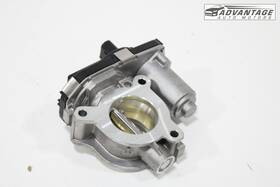
( Manufacturer Part Number: 25207076 ), ( Oe/oem Part Number: 55510678 ), ( Bundle Listing: No ), ( Color: Gray ), ( Features: Individual ), ( Fitment Type: Direct Replacement ), ( Type: Throttle Body )
Review CHEVROLET Trax 1.2l L3 Engine Motor Air Intake Throttle Body Valve Oem fits FLEX 2025
The **Chevrolet 2025 Trax 1.2L L3 Flex-Fuel Engine Air Intake Throttle Body Valve (Part Number: 25207076)** represents a critical component in the vehicle s intake system, designed to optimize performance, efficiency, and responsiveness across a wide range of driving conditions. This precision-engineered throttle body valve is specifically tailored for the Trax s compact yet powerful 1.2-liter turbocharged inline-three (L3) engine, which delivers a seamless blend of fuel efficiency and spirited acceleration ideal for both city commutes and light off-road adventures. Crafted from high-grade materials, the throttle body valve features a robust yet lightweight construction, ensuring durability while minimizing unnecessary weight in the engine bay. Its advanced design incorporates a **variable throttle response system**, allowing for smooth, progressive airflow regulation that adapts dynamically to driver input, throttle position, and engine load. This adaptability enhances throttle response, reduces lag, and contributes to the Trax s reputation for nimble handling and efficient power delivery, whether operating on premium gasoline or E85 flex-fuel blends. The valve is engineered to integrate seamlessly with the engine s turbocharged induction system, ensuring optimal air-fuel mixture precision for both performance and emissions compliance. Additionally, its modular design allows for straightforward installation and maintenance, making it a practical choice for both dealership service centers and DIY enthusiasts. Whether restoring stock performance or customizing the Trax for enhanced tuning potential, this throttle body valve serves as a foundational element in maintaining the engine s reliability and responsiveness, embodying Chevrolet s commitment to innovation in compact, versatile powertrain solutions.
### **Pros and Cons of Buying a 2025 Chevrolet Trax with a 1.2L L3 Flex Engine (Air Intake, Throttle Body, Valve Considerations)**
#### **Pros**
1. **Compact and Fuel-Efficient Design**
- The Chevrolet Trax is a subcompact SUV, making it ideal for urban driving, tight parking spaces, and low fuel consumption. The 1.2L L3 Flex engine is optimized for efficiency, delivering around **30-35 MPG combined** (varies by transmission and driving conditions), which is competitive in its class.
- The **flex-fuel capability** (E85 or gasoline) allows for cost savings if ethanol is readily available and priced lower than premium fuel.
2. **Affordable Upfront and Operational Costs**
- The Trax is positioned as a budget-friendly SUV, with a starting MSRP that is lower than many competitors in the subcompact segment (e.g., Nissan Kicks, Hyundai Venue).
- Maintenance costs are generally lower than larger SUVs, and the 1.2L engine is known for reliability in its generation, reducing long-term expenses.
3. **Flexible Fuel Option (L3 Flex Engine)**
- The ability to run on **E85 (85% ethanol)** can provide fuel savings in regions where ethanol is cheaper than gasoline. This is particularly useful for drivers who frequently travel or have access to ethanol pumps.
- The engine is designed to handle both fuels without major modifications, offering versatility.
4. **Modern Tech and Safety Features (Depending on Trim)**
- The Trax often includes standard safety features such as **forward collision alert, automatic emergency braking, lane-keep assist, and blind-spot monitoring** (availability varies by market and trim level). These features enhance safety without the premium price tag of larger SUVs.
- Infotainment systems (if equipped) may include **Apple CarPlay and Android Auto**, though the screen size is modest compared to higher-end vehicles.
5. **Easy to Park and Maneuver**
- Its small size makes it ideal for city driving, where parking and navigating narrow streets is a challenge. The Trax s tight turning radius and compact dimensions reduce stress in congested areas.
6. **Potential for Customization (Air Intake, Throttle Body, Valves)**
- If you are considering aftermarket modifications (e.g., **cold air intake, throttle body upgrades, or valve adjustments**), the 1.2L L3 engine is a relatively simple platform to work with. However, performance gains from these modifications may be modest due to the engine s small displacement.
- Some owners report that **throttle response can be improved** with aftermarket parts, though this is not a major selling point for most buyers.
7. **Reliability and Durability (Based on Previous Generations)**
- The Trax s predecessor (2019-2023 models) received positive reviews for reliability, particularly in the **engine and transmission departments**. If the 2025 model follows a similar design philosophy, it may continue this trend.
- The 1.2L engine is known for longevity in applications like the Chevrolet Spark and Trax, provided routine maintenance is performed.
---
#### **Cons**
1. **Limited Power and Performance**
- The **1.2L L3 Flex engine** produces only about **100-110 horsepower** and **88-95 lb-ft of torque**, which is **insufficient for towing, heavy loads, or spirited driving**. Acceleration may feel sluggish, especially when carrying passengers or cargo.
- The Trax is not a performance-oriented vehicle, and modifications (e.g., air intake, throttle body) will only provide **marginal improvements** in power delivery.
2. **Ride Comfort and Handling**
- The Trax s small size and lightweight construction result in a **stiff ride**, particularly on rough roads or highways. Expect more vibration and less isolation from bumps compared to larger SUVs.
- Handling is adequate for city driving but lacks the **smoothness and stability** of mid-size or full-size SUVs.
3. **Interior Space Limitations**
- While the Trax is practical for solo or two passengers, **cargo space is tight** (around **12.6 cu. ft. behind rear seats**). Folding the seats slightly increases space, but it is still less than competitors like the Kia Seltos or Mazda CX-30.
- Rear legroom is limited, making long trips uncomfortable for taller passengers.
4. **Resale Value and Market Appeal**
- Subcompact SUVs generally have **lower resale values** compared to mid-size or luxury SUVs. If you plan to sell or trade in the Trax in a few years, depreciation may be a concern.
- The Trax is not as desirable as more premium or feature-rich competitors, which could affect long-term value.
5. **Potential Issues with Flex-Fuel Systems**
- While the **L3 Flex engine** is designed to run on E85, some owners report **increased wear on gaskets and seals** due to ethanol s corrosive properties. If you frequently switch between fuels, you may need to monitor for leaks or performance drops.
- Not all service centers are equally experienced with flex-fuel vehicles, which could complicate maintenance.
6. **Aftermarket Modification Limitations**
- While you can install an **air intake, throttle body, or valve springs**, the **1.2L engine is not built for high-performance tuning**. Expect **minimal power gains** (if any) and potential reliability risks if pushed too hard.
- Some modifications (e.g., forced induction) are **not recommended** due to the engine s fragility.
7. **Limited Off-Road Capability**
- The Trax is a **city-focused SUV** with **no official off-road features**. Tires are designed for pavement, and ground clearance is modest (around **7.5 inches**), making it unsuitable for trails or rough terrain.
8. **Build Quality and Interior Materials**
- The Trax s interior is **functional but utilitarian**, with **hard plastics and basic upholstery** in lower trims. Higher trims offer slightly better materials, but they still lag behind competitors like the Honda HR-V or Toyota RAV4.
- Noise insulation is poor, leading to **wind and road noise** at highway speeds.
---
### **Conclusion**
The **2025 Chevrolet Trax with a 1.2L L3 Flex engine** is best suited for **budget-conscious buyers** who prioritize **fuel efficiency, urban maneuverability, and affordability** over power, comfort, or space. It excels in **city driving, low operating costs, and flex-fuel flexibility**, making it a practical choice for solo drivers or those who frequently use ethanol fuel.
However, if you need **more power, better ride quality, or a spacious interior**, the Trax falls short. The **aftermarket modifications (air intake, throttle body, valve adjustments)** will not significantly enhance performance, and the engine s limitations mean it is not ideal for enthusiasts or heavy-duty use.
### **Recommendation**
- **Buy the Trax if:**- You need a **small, fuel-efficient SUV for city driving**.
- You want **flex-fuel capability** to save on ethanol costs.
- You prioritize **low upfront and maintenance costs**.
- You are okay with **limited power, space, and comfort**.
- **Avoid the Trax if:**- You require **more power, better handling, or a smoother ride**.
- You frequently carry **large cargo or passengers**.
- You plan to **modify the engine for performance** (expect minimal gains).
- You prefer **premium build quality or advanced safety features**.
**Alternative Considerations:**- If you want **better fuel efficiency and a slightly larger interior**, consider the **Honda HR-V or Toyota RAV4 Hybrid**.
- If you need **more power and comfort**, a **Mazda CX-30 or Hyundai Kona** may be a better fit.
- If **flex-fuel is a priority**, ensure the Trax s maintenance needs align with your local service capabilities.
Ultimately, the Trax is a **solid choice for its intended audience** those who value practicality over luxury but it is not a vehicle for those seeking performance or premium features.
Details:
MILEAGE: 3K MILES. TRANSMISSION: 6-SPEED AUTOMATIC 6T40. COLOR: EXTERIOR BLACK MEET KETTLE METALLIC GB8 / WA384A. BODY TYPE: SPORT UTILITY 4-DOOR SUV.
part #: 25207076 price
- $84.99
specifications throobo:
- for models: Flex
- for makes: Chevrolet
- for years: 2025
- mpn: 25207076
- oe/oem part number: 55510678
- bundle listing: No
- color: Gray
- features: Individual
- fitment type: Direct Replacement
- type: Throttle Body
offer throobo:
- sold: 0
- quantity: 1
- availability: In Stock
- options: Ship-to-home
- started: May 15, 2026
- best offers: True
returns throobo:
- time: 30 Days
- paid by: Seller
- policy: Returns Accepted
seller throobo:
- city: Kingsley, Michigan
- # reviews: 63124
- rating: 99.9%
payments throobo:
- credit card: Diners-club
- other
- wallet: Paypal
shipping throobo:
- type: Fixed
- cost: $0.00
- class: Standard
- transit: 4-7 Days
- service: Standard
general throobo:
- condition: Used
- Car Truck Parts Accessories > Air Fuel Delivery > Throttle Bodies
Chevrolet 25207076 Is Similar To:
- 053.8.aa.995aa.7904.c Unbranded Throttle Valve Body 2008 Chevrolet (31% similar) Shows normal signs of wear and use...(February 25th, 2018)
- 0617.aa.591hb383.b Gm Chevrolet Engine Electric Throttle Body (42.7% similar) B on plastic cover. Most parts sold have been washed in an industrial washer and checked for damage. Buyer should compare part numbers, photos, and to ensure fit. Has part number issue not related to this. Removed from engine that had been due to rod failure...(November 5th, 2018)
- 07197-2 Chevrolet Aveo Throttle Body Oem (46.5% similar) Just because your make, model and year are listed does not guarantee fitment as the manufacturer offers several different styles trims for each. No across the room shots or poor of items listed. This simply means it fits some model's years but not necessarily all vehicles within that model or year. ...(March 31st, 2018)
- 12568580 8125685800 Chevrolet Throttle Body Assembly 2006 (35.6% similar) Grading of parts very subjective process but our best keep uniform. If noted as assembly, it will include the lug wrench mass airflow sensor: does not housing unless pictured power steering pump: includes pulley and attached reservoir. Transfer case: does not include electric shift motor washer ...(March 8th, 2017)
- 12577029 Chevrolet 2006 Impala Throttle (40.6% similar) Please view item carefully upon purchase...(October 18th, 2017)
- 12605209 General Motors Throttle Body Chevrolet Corvette Camaro Oem Crate Motor (42.9% similar) Any concerns please feel free to contact me. Motor was for a circle track car. Throttle body is 100 functional, please see pictures. I have accounted for this is in the price. New, take-of throttle body from as LS3 crate motor. No gimmicks on anything I sell - great price, free shipping and item ...(June 23rd, 2018)
- 12631016 Gm Chevrolet Gmc Oem (23.7% similar) ...(March 17th, 2017)
- 12651346 Chevrolet Throttle Body For (38.4% similar) All notes in that section box must be matched to verify fitment for your vehicle. The part will come with all sensors and idle controls on it unless noted above in notes section. A: sorry, but you cannot. H4WUSEQCKBE7LMQPQWHWCG Z0445 our throttle valves and bodies come with a premium lifetime ...(September 25th, 2017)
- 12673014 Acdelco Gm Original Equipment Fuel Injection Throttle Body Fits Chevrolet (37.4% similar) Superseded part numbers this item may have been from a different number manufacture. This part fits vehicles made in the following years 2016 , 2017 , 2018...(August 7th, 2018)
- 13771406 Aftermarket Products New Throttle Body Chevy Yukon Savana Chevrolet Silverado (33.1% similar) The items are brand new parts that look and fit same as original, except at a much better price...(November 4th, 2018)
- 17087019 1619jnl Chevrolet Silverado Throttle Body (38.8% similar) Removed from my running Silverado. Needs throttle body sensor...(April 16th, 2018)