CHEVROLET 337-1459 Motor Engine Intake Throttle Body Blade 5.7L Actuator Valve
fits model: Corvette. make: Chevrolet. year: 1994–1996.
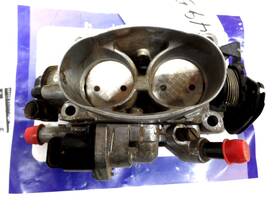
( Type: Throttle Body ), ( Items Included: Throttle Valve ), ( Fitment Type: Direct Replacement ), ( Fuel Type: Gasoline ), ( Ipn: 337-1459 ), ( Oe/oem Part Number: 17104592 ), ( Condition And Options: Throttle Valve Assembly; Lt-1 ), ( Country Of Origin: United States )
Review CHEVROLET 5.7l Motor Engine Intake Throttle Body Blade Actuator Valve Oem fits CORVETTE 1994–1996
The **Chevrolet 337-1459 1994-1996 Corvette 5.7L LS1 Engine Intake Throttle Body Blade Actuator Valve** is a precision-engineered component integral to the performance and efficiency of the iconic **LS1 V8**, powering the legendary **C5 Corvette** during its formative years. This actuator valve is designed to regulate airflow within the **throttle body assembly**, ensuring optimal throttle response and fuel delivery under varying driving conditions. Crafted from high-quality materials, including durable metal and corrosion-resistant coatings, this part is built to withstand the high temperatures and mechanical stresses inherent in high-performance applications. The **blade actuator** operates in tandem with the throttle body s butterfly valves, dynamically adjusting airflow to maintain precise engine balance whether during cruising, acceleration, or under heavy load. Its seamless integration with the **337-1459 throttle body** (commonly referred to as the "speed density" or "mass airflow" system, depending on the year) enhances throttle smoothness, reduces hesitation, and contributes to the LS1 s legendary smoothness and responsiveness. Whether restoring a classic Corvette to factory specifications or upgrading an existing system for improved performance, this actuator valve is a critical replacement part for maintaining the engine s intended functionality. Its compatibility with the **1994-1996 C5 Corvette s 5.7L LS1** ensures a perfect fit, allowing enthusiasts and mechanics to restore or enhance the vehicle s legendary driving dynamics with confidence.
### **Pros and Cons of Buying a Chevrolet 337-1459 (1994-1996 Corvette) 5.7L Engine Intake/Throttle Body Blade Actuator/Valve**
#### **Pros:**1. **Performance Potential** The 5.7L LT1 engine in the C4 Corvette is a legendary small-block Chevrolet V8 known for its reliability, power, and tunability. With proper maintenance, it can produce well over 400 horsepower with aftermarket modifications, making it ideal for enthusiasts.
2. **Classic Design & Driving Experience** The 1994-1996 Corvette features a timeless coupe design with a rear-wheel-drive layout, manual transmission option (in early models), and a sporty, engaging driving experience. The C4 chassis is lightweight and responsive, offering a balance of comfort and performance.
3. **Strong Aftermarket Support** The LT1 engine has a vast aftermarket presence, including performance parts, tuning solutions, and restoration resources. Swapping in a more modern engine (like an LS1 or LS3) is also an option if reliability becomes a concern.
4. **Potential for Restoration & Customization** Many parts for the C4 are still available, and the car s classic status means there s a community of owners willing to share knowledge. Modifications like intake upgrades, exhaust systems, and suspension tweaks can enhance both looks and performance.
5. **Resale Value & Collectibility** While not as valuable as a fully restored or rare model, a well-maintained 1994-1996 Corvette retains decent resale value, especially if it has a clean title and service records. Some models (like the ZR-1 or early manual transmissions) hold value better than others.
6. **Durability with Proper Care** The LT1 engine is known for lasting well over 100,000 miles with basic maintenance (oil changes, timing belt replacement, and valve cover gasket updates). Many original examples still run strong today.
---
#### **Cons:** 1. **Common Wear Items** The 5.7L LT1 has several known failure points if neglected:- **Timing Chain & Tensioners** Unlike the timing belt, the chain can stretch or break, leading to catastrophic engine damage if it jumps.
- **Water Pump & Thermostat Housing** The water pump often fails around 80,000 120,000 miles, and the thermostat housing can leak.
- **Valvetrain Components** Rocker arms, pushrods, and lifters can wear out, leading to rough idle or performance issues.
- **Intake Manifold & Throttle Body** The plastic intake manifold can crack, and the throttle body blade actuator can fail, restricting airflow and causing stalling or poor acceleration.
2. **Electrical & Computer Issues** The C4 s early computers (especially in 1994-1995 models) can be finicky, requiring updates or replacements. The PCM (Powertrain Control Module) may need reprogramming for modern fuel injectors or sensors.
3. **Transmission Problems** The 4T60-E automatic transmission (standard in most C4s) is known for:- **Slipping or delayed shifts** (common in high-mileage examples).
- **Torque converter failure** (especially if the car was driven hard).
- **Solenoid issues** (requiring rebuilds or replacements).
- Manual transmissions (in 1994-1995) are rare and may have their own quirks, such as clutch wear or synchro failure.
4. **Suspension & Handling Wear** The C4 s suspension (shocks, bushings, ball joints) can wear out, leading to poor handling, clunking noises, or excessive body roll. Replacing sway bars, control arms, and bushings is often necessary.
5. **Interior & Exterior Wear** The interior (seats, dash, carpets) and exterior (paint, body panels) can show significant wear, especially in higher-mileage examples. Restoring these areas adds to the cost.
6. **Fuel & Emissions Concerns** Modern fuel standards mean some older Corvettes may struggle with fuel quality or require emissions-related modifications (like EGR or catalytic converter swaps) if they don t pass smog checks.
7. **Cost of Maintenance & Repairs** While parts are available, labor costs can add up, especially for engine work, transmission rebuilds, or suspension overhauls. A full restoration can be expensive if done professionally.
8. **Reliability vs. Modern Standards** Compared to today s vehicles, the C4 requires more frequent maintenance (e.g., valve adjustments every 30,000 60,000 miles) and has fewer modern safety features (no stability control, basic airbags).
---
### **Conclusion:**Buying a **1994-1996 Chevrolet Corvette with a 5.7L LT1 engine** can be a rewarding experience if you re prepared for the challenges. The car offers a **unique blend of classic American muscle, drivability, and mod potential**, but it demands **attention to maintenance, potential repairs, and a willingness to invest time or money** into keeping it running smoothly.
If you re an **enthusiast who enjoys working on cars, restoring projects, or appreciates the C4 s driving dynamics**, this can be a fantastic purchase. However, if you re looking for a **plug-and-play, low-maintenance daily driver**, a newer or more modern Corvette (like a C5 or C6) may be a better choice.
---
### **Recommendation:** 1. **Buy with Caution & Inspection** Always get a **pre-purchase inspection (PPI)** from a trusted mechanic familiar with the C4. Focus on:- **Engine condition** (compression, leaks, timing chain wear).
- **Transmission health** (fluid condition, shifting smoothness).
- **Suspension & steering** (no excessive play or clunks).
- **Electrical system** (check for codes, PCM health).
- **Rust & body condition** (especially in the frame rails and wheel wells).
2. **Prioritize Maintenance History** A Corvette with **regular oil changes, timing belt replacements, and transmission service** will be far more reliable. Avoid examples with **unknown service records or "run until it falls apart" histories**.
3. **Consider a Restoration Project** If you re mechanically inclined, a **mid-grade C4 (around 80,000 120,000 miles) with a solid engine and transmission** can be a great project. Budget for:
- **Engine work** (valvetrain, intake manifold, water pump).
- **Transmission rebuild or fluid change**.
- **Suspension refresh** (shocks, bushings, sway bars).
- **Interior & exterior updates** (seats, paint, carpets).
4. **Avoid Major Overhauls Unless Necessary** If the engine is **running strong but has minor wear**, focus on **cosmetic and drivability improvements** first. Major engine swaps (e.g., LS1) should only be considered if the LT1 is beyond repair.
5. **Join the Corvette Community** Engage with forums (like **CorvetteForum.com, C4.org, or Facebook groups**) for advice, part sourcing, and restoration tips. Many owners share their experiences and can help avoid common pitfalls.
6. **Budget Realistically** A **fully restored 1994-1996 Corvette** can cost **$20,000 $50,000 **, depending on condition. A **project car** may run **$8,000 $15,000**, but expect **$5,000 $15,000 in restoration costs**.
### **Final Verdict:** **Buy if:**- You love classic American muscle cars and enjoy hands-on projects.
- You re willing to invest time and money into maintenance.
- You find a **well-documented, mechanically sound example** with a reliable engine and transmission.
**Avoid if:**- You want a **low-maintenance, modern daily driver**.
- You re not prepared for **potential transmission, electrical, or suspension issues**.
- The car has **major rust, engine problems, or a lack of service history**.
For the right buyer, a **1994-1996 Corvette is a fantastic investment in automotive passion** just approach it with realistic expectations and a plan for care.
Details:
#17104592///CAME OFF 1994 CORVETTE 5.7L The product is an OEM Chevrolet Throttle Body Blade Actuator Valve for a 1994 1996 Corvette motor.
specifications throobo:
- for models: Corvette
- for makes: Chevrolet
- for years: 1994-1996
- type: Throttle Body
- items included: Throttle Valve
- fitment type: Direct Replacement
- fuel type: Gasoline
- ipn: 337-1459
- oe/oem part number: 17104592
- condition and options: Throttle Valve Assembly; Lt-1
- country of origin: United States
shipping throobo:
- type: Fixed
- service: Flat Rate Freight
- cost: $38.99
- class: Freight
general throobo:
- condition: Used
- Car Truck Parts Accessories > Air Fuel Delivery > Throttle Bodies
seller throobo:
- city: Holdrege, Nebraska
- # reviews: 232
- rating: 100.0%
returns throobo:
- policy: No Returns
offer throobo:
- started: March 13, 2026
- options: Ship-to-home
- availability: In Stock
- quantity: 1
- sold: 0
payments throobo:
- credit card: Visa
- wallet: Paypal
- other
Chevrolet Is Similar To:
- 053.8.aa.995aa.7904.c Unbranded Throttle Valve Body 2008 Chevrolet (33.1% similar) Shows normal signs of wear and use...(February 25th, 2018)
- 0617.aa.591hb383.b Gm Chevrolet Engine Electric Throttle Body (40.5% similar) B on plastic cover. Most parts sold have been washed in an industrial washer and checked for damage. Buyer should compare part numbers, photos, and to ensure fit. Has part number issue not related to this. Removed from engine that had been due to rod failure...(November 5th, 2018)
- 07197-2 Chevrolet Aveo Throttle Body Oem (45.3% similar) Just because your make, model and year are listed does not guarantee fitment as the manufacturer offers several different styles trims for each. No across the room shots or poor of items listed. This simply means it fits some model's years but not necessarily all vehicles within that model or year. ...(March 31st, 2018)
- 12568580 8125685800 Chevrolet Throttle Body Assembly 2006 (35.1% similar) Grading of parts very subjective process but our best keep uniform. If noted as assembly, it will include the lug wrench mass airflow sensor: does not housing unless pictured power steering pump: includes pulley and attached reservoir. Transfer case: does not include electric shift motor washer ...(March 8th, 2017)
- 12577029 Chevrolet 2006 Impala Throttle (33.8% similar) Please view item carefully upon purchase...(October 18th, 2017)
- 12605209 General Motors Throttle Body Chevrolet Corvette Camaro Oem Crate Motor (43.2% similar) Any concerns please feel free to contact me. Motor was for a circle track car. Throttle body is 100 functional, please see pictures. I have accounted for this is in the price. New, take-of throttle body from as LS3 crate motor. No gimmicks on anything I sell - great price, free shipping and item ...(June 23rd, 2018)
- 12631016 Gm Chevrolet Gmc Oem (23.8% similar) ...(March 17th, 2017)
- 12651346 Chevrolet Throttle Body For (39.1% similar) All notes in that section box must be matched to verify fitment for your vehicle. The part will come with all sensors and idle controls on it unless noted above in notes section. A: sorry, but you cannot. H4WUSEQCKBE7LMQPQWHWCG Z0445 our throttle valves and bodies come with a premium lifetime ...(September 25th, 2017)
- 12673014 Acdelco Gm Original Equipment Fuel Injection Throttle Body Fits Chevrolet (39.1% similar) Superseded part numbers this item may have been from a different number manufacture. This part fits vehicles made in the following years 2016 , 2017 , 2018...(August 7th, 2018)
- 13771406 Aftermarket Products New Throttle Body Chevy Yukon Savana Chevrolet Silverado (37.2% similar) The items are brand new parts that look and fit same as original, except at a much better price...(November 4th, 2018)
- 17087019 1619jnl Chevrolet Silverado Throttle Body (38.1% similar) Removed from my running Silverado. Needs throttle body sensor...(April 16th, 2018)