TOYOTA 337-58466 Throttle Body Manual 3.0L
fits model: Supra. make: Toyota. year: 1987–1988.
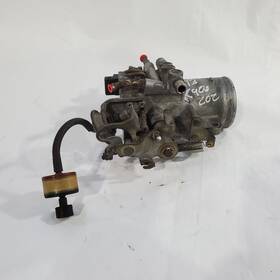
( Conditions Options: Mt ), ( Genuine Oem: Yes ), ( Ipn: 337-58466 ), ( Descriptionpartcondition: 1987 1988 Toyota Supra Oem Throttle Body Manual 3.0l ), ( Manufacturer Warranty: 90 Day ), ( Type: Throttle Body )
Review TOYOTA Oem Throttle Body Manual 3.0l fits SUPRA 1987–1988
The **Toyota 337-58466 Throttle Body (1987-1988 3.0L Supra)** is a meticulously engineered component designed to deliver precise throttle control and optimal airflow to the engine bay of the legendary Toyota 3.0L Supra, ensuring a seamless and responsive driving experience. This throttle body is a critical part of the fuel injection system, responsible for regulating the intake of air into the engine while working in tandem with the Electronic Control Module (ECM) to maintain the ideal air-fuel mixture for performance and efficiency. Crafted with Toyota s signature attention to detail, this throttle body features a durable **plastic housing** reinforced with precision-machined internals, including a **throttle valve** and **idle control valve**, both of which are essential for smooth operation under varying driving conditions. The unit is equipped with a **throttle position sensor (TPS)**, which sends real-time feedback to the ECM to adjust fuel delivery and ignition timing, ensuring optimal engine performance whether cruising on the highway or accelerating from a standstill. For enthusiasts and restorers seeking to restore or upgrade their Supra s drivetrain, this throttle body is a direct-fit replacement, compatible with the **A80 chassis** models from 1987 and 1988, guaranteeing a perfect match with the engine bay s existing wiring harness and mounting points. Whether used in a classic restoration project or as part of a performance modification, this throttle body exemplifies Toyota s commitment to reliability and engineering excellence, providing the foundation for a refined and powerful driving experience that defines the Supra s legacy.
### **Pros and Cons of Buying a 1987-1988 Toyota 337-58466 Supra (Throttle Body, 3.0L)**
#### **Pros**
1. **Classic Design and Prestige**
The 1987-1988 Toyota Supra (A80 generation) is widely regarded as one of the most iconic Japanese sports cars of the 1980s. Its sleek, aerodynamic styling, aggressive stance, and timeless silhouette make it a desirable collector s item. Owning one carries prestige, especially among enthusiasts of JDM (Japanese Domestic Market) cars.
2. **Strong Performance for Its Time**
The 3.0L inline-six engine (2JZ-GE in later models, but the early throttle-body 3.0L is still capable) produces around **170-190 horsepower** (depending on tuning and condition), which was impressive for its era. With proper maintenance and modifications, it can still deliver engaging driving dynamics, especially when paired with a manual transmission.
3. **Manual Transmission Option**
The manual transmission (4-speed in early models) adds to the driving experience, offering more control and engagement compared to an automatic. This makes it more appealing to purists who enjoy the tactile feedback of shifting gears.
4. **Reliability (If Well-Maintained)**
Toyota s reputation for durability extends to the Supra, particularly if the car has been properly cared for. The 3.0L engine, while not as legendary as the later 2JZ, is a robust inline-six that can last for decades with regular maintenance. Common issues (like timing chain stretch) can be mitigated with proper upkeep.
5. **Modding Potential**
The Supra has a strong aftermarket support, especially for the 3.0L engine. Upgrades like **intake manifolds, exhaust systems, fuel injection conversions (from carburetion to EFI), and performance camshafts** can significantly improve power and drivability. The throttle body can also be swapped for a more modern setup, though this requires some mechanical knowledge.
6. **Lower Purchase Price Compared to Later Models**
Compared to the later **2JZ-GTE (1990 )** or **2JZ-NE (1993 )** Supra models, the 1987-1988 throttle-body version is often more affordable, making it accessible to buyers who want a piece of Supra history without the premium pricing of later turbocharged models.
7. **Driving Enjoyment**
The Supra s weight distribution, rear-wheel-drive layout, and manual transmission (if available) make it a fun car to drive on twisty roads. While not as quick as modern sports cars, it offers a more engaging, analog driving experience.
---
#### **Cons**
1. **Outdated Technology and Reliability Issues**
The 1987-1988 Supra was built in an era when automotive technology was less advanced. Key drawbacks include:- **Carbureted engine (early models):** The throttle-body setup is less efficient than modern fuel injection, leading to poorer fuel economy, rougher idling, and potential drivability issues.
- **Weak suspension and brakes:** The stock suspension is soft and lacks modern refinements, leading to a less precise handling feel. Brakes are basic and may require upgrades for safety.
- **No ABS or modern safety features:** Unlike today s cars, the Supra lacks anti-lock brakes, traction control, and electronic stability systems, making it less safe in extreme conditions.
2. **High Maintenance Costs**
- **Timing chain stretch:** The 3.0L engine is known for timing chain wear, which can lead to valve train issues if not addressed. Replacing the chain and tensioners is a costly job.
- **Fuel system issues:** Carburetion is prone to clogging, vacuum leaks, and poor atomization, requiring frequent tuning and cleaning.
- **Electrical quirks:** Older Toyotas often suffer from electrical gremlins, such as faulty sensors, wiring issues, or failing alternators.
- **Rust:** If the car has been exposed to harsh weather, rust in the wheel wells, subframe, and floor pans can be a major concern.
3. **Poor Fuel Economy**
The carbureted 3.0L engine is thirsty, averaging around **12-15 MPG** in real-world driving. This makes long-distance driving or daily use expensive, especially with modern fuel prices.
4. **Limited Modern Comforts**
- **Basic interior:** The cabin is functional but lacks modern amenities like power windows, cruise control (on early models), or climate control. Seats are firm and may not be ergonomic for all drivers.
- **Noisy cabin:** Road and wind noise can be intrusive, especially at highway speeds.
- **Poor visibility:** The large rear wing and aggressive stance can obstruct rear visibility.
5. **Modifications Required for Modern Use**
To make the Supra comfortable and reliable for daily driving, significant modifications may be needed:- **Fuel injection conversion** (e.g., EFI or even a modern Toyota 5S-FE engine swap).
- **Suspension upgrades** (coilovers, poly bushings) for better handling.
- **Brake system upgrades** (larger rotors, calipers, or even ABS retrofits).
- **Exhaust and intake upgrades** for better performance and drivability.
These changes add to the cost and complexity of ownership.
6. **Insurance and Registration Costs**
Classic cars often have high insurance premiums, especially if they re modified or driven frequently. Additionally, some states or countries have restrictions on older vehicles, requiring emissions testing or safety inspections.
7. **Limited Aftermarket Support Compared to Later Models**
While there is a modding community for the 3.0L Supra, it doesn t have the same level of aftermarket support as the **2JZ** models. Finding parts, tuners, and mechanics with experience on these cars can be more difficult.
8. **Potential for Hidden Problems**
Like any older car, the 1987-1988 Supra may have **hidden issues** such as:- **Transmission wear** (especially in manual models).
- **Rust in critical areas** (subframe, rear diff, suspension mounts).
- **Electrical failures** (ignition switches, sensors, wiring harnesses).
A thorough pre-purchase inspection is **essential** to avoid costly surprises.
---
### **Conclusion**
The **1987-1988 Toyota Supra (3.0L throttle body)** is a **fantastic collector s car and a fun project vehicle** for enthusiasts who appreciate classic JDM design and want to engage in restorations or modifications. It offers **strong performance for its era, a cult following, and a rewarding driving experience** especially if you enjoy working on cars and don t mind some quirks.
However, it is **not a practical daily driver** due to its **poor fuel economy, high maintenance needs, outdated technology, and lack of modern comforts**. If you re looking for a **reliable, low-maintenance, and safe** sports car, a modern JDM car (like a **Toyota MR2, Nissan 300ZX, or Mazda RX-7**) or even a well-maintained **2JZ Supra** would be a better choice.
For the right buyer someone who **values nostalgia, enjoys mechanical challenges, and is willing to invest time and money into restoring or modifying the car** the 1987-1988 Supra is an **exciting and rewarding purchase**. For everyone else, it may be **too much hassle for the enjoyment it provides**.
---
### **Recommendation**
- **Buy if:**- You are an **enthusiast who loves classic JDM cars** and wants a project to work on.
- You have **mechanical skills** or access to a trusted mechanic for maintenance.
- You are **willing to invest in modifications** (fuel injection, suspension, brakes, etc.) to make it comfortable and reliable.
- You **don t mind higher running costs** (fuel, insurance, parts) in exchange for ownership of a piece of automotive history.
- You plan to **drive it occasionally** rather than use it as a daily driver.
- **Avoid if:**- You want a **low-maintenance, safe, and practical** sports car.
- You **don t enjoy working on cars** or don t have the budget for repairs.
- You **need reliable daily transportation** (consider a **2JZ Supra or a modern sports car instead**).
- You **can t afford the hidden costs** of restoring and maintaining an older Toyota.
**Final Verdict:**If you re **passionate about the Supra s legacy, enjoy the challenge of bringing an old car back to life, and can justify the costs, this is a fantastic purchase**. However, if you re looking for a **modern, hassle-free driving experience**, there are better options available. Always **get a pre-purchase inspection** and **budget for at least $5,000 $10,000 in repairs** before buying.
Details:
These parts are used, therefore, please expect minor plastic wear/surface rust on the housing. Please see pictures for reference of what is included. Orders placed after 2:00 pm CST cannot be guaranteed shipping that day.
1987 1988 Toyota Supra OEM Throttle Body Manual 3.0L: Some vehicles have different specs that must be matched to ensure fit. Not just our Heritage, but Legacy 1987 1988 Toyota Supra OEM Throttle Body Manual 3.0L. Throttle Bodies are guaranteed to be non-broken, non-leaking, non-warped, and in good used shape.
specifications throobo:
- for models: Supra
- for makes: Toyota
- for years: 1987-1988
- conditions options: Mt
- genuine oem: Yes
- ipn: 337-58466
- descriptionpartcondition: 1987 1988 Toyota Supra Oem Throttle Body Manual 3.0l
- manufacturer warranty: 90 Day
- type: Throttle Body
offer throobo:
- options: Ship-to-home
- best offers: True
- quantity: 1
- availability: In Stock
- started: April 7, 2026
- sold: 0
payments throobo:
- wallet: Apple-pay
- credit card: Mastercard
- other
general throobo:
- condition: Used
- Car Truck Parts Accessories > Air Fuel Delivery > Throttle Bodies
returns throobo:
- policy: Returns Accepted
- time: 30 Days
- paid by: Buyer
seller throobo:
- rating: 99.7%
- # reviews: 62193
- city: Mobile, Alabama
shipping throobo:
- transit: 3-7 Days
- class: Standard
- service: Standard
- type: Fixed
- cost: $15.00
Toyota Is Similar To:
- 12414588 Aftermarket Products New Throttle Body Front For Toyota Camry Highlander (33.6% similar) The items are brand new parts that look and fit same as original, except at a much better price...(April 21st, 2018)
- 132 51012 233 Wd Express Fuel Injection Throttle Toyota Scion Aisan (35.7% similar) Example: type in fiat brake pad choose the correct item by looking compatibility for each listing. Central valley wholesale goods which has the largest selection of Victorians Swiss army knives and parts import car for European Asian cars. This part fits vehicles made in the following years 2011...(May 5th, 2018)
- 1360004 Unitex Oe Throttle Body For Toyota Yaris (38.2% similar) Prefect fit, smooth operation, 100 meet oe requirement. You can trust us give both nice quality items and best buying experiences. If you are not sure whether the part is suitable for your vehicle or no core rebuilt. Semi-automated assembly. 5l l4 replacement oe TB1116 S10125 features brand new ...(January 14th, 2019)
- 14411638 Perfect Fit New Kit Throttle Body For Toyota 723650903216 (35.9% similar) Some manufacturers require that you register your product to activate its warranty. This is the most affordable replacement product for your old or damaged factory part. All replacement brand items are backed by 1-YEAR, unlimited-mileage warranty. Brand new, not remanufactured affordable replacement...(November 6th, 2018)
- 154-0156 Fuel Injection Throttle Body Fits Toyota Tacoma (37.3% similar) This part fits vehicles made in the following years 2005 , 2006 , 2007 , 2008 , 2009 , 2010 , 2011 , 2012 , 2013 , 2014...(July 4th, 2018)
- 154-0167 Fuel Injection Throttle Body Fits Toyota Yaris (35.9% similar) Cardin industries, inc. Is a leader in engineering and innovation for the automotive aftermarket. 5L-L4FUEL injection throttle body beck anally fits toyota yaris our 6,000 global employees support a catalog of 46,000 new and sustainably-remanufactured parts. We build it better...(October 6th, 2018)
- 22030-0f010 Toyota Tundra Throttle Body Cyl (49.5% similar) As pictured in good used cosmetic condition tested. This is a factory part taken out of 2006 tundra double cab 4 drys. Please for more details. We combine shipping if possible. If you are looking for any other tundra parts just let us know. Pictures show actual item and its condition more ...(May 1st, 2018)
- 22030-0h030 Toyota Oem 07 08 (26.7% similar) ...(July 25th, 2017)
- 22030-0p010 Toyota Tacoma Throttle Body Assembly Oem (45.6% similar) Fitment: toyota 4RUNNER V62007-2009 toyota DJ cruiser these electronic throttle bodies will need reprogramming from a local dealer to work accurately with your vehicle. V62005-2011 toyota tundra v6 part number compatibility: 0P010. With only 70K miles. V62005-2015 toyota Tacoma throttle body is inn ...(November 29th, 2018)
- 22030-0p050 Toyota Sienna Throttle Body (45.5% similar) ...(July 10th, 2017)
- 22030-0t070 Toyota Throttle Body For Corolla (43.4% similar) Up for sale is one electric throttle body removed from a wrecked 2009 Toyota corolla with 88K miles...(January 8th, 2019)