AUDI Accelerator Throttle Cable 811-721-555E. Accelerator/
fits make: Audi. year: 1979.
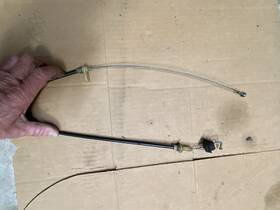
( Manufacturer Part Number: 811-721-555E ), ( Type: Accelerator/throttle Cable. )
Review AUDI 811-721-555e. Original Accelerator/ Throttle Cable fits 1979
The **Audi 100 (Type 44) 811-721-555E accelerator/throttle cable** from the late 1970s is a meticulously crafted, high-performance component essential for maintaining the precise and responsive throttle control characteristic of this iconic German luxury sedan. Originally designed for the **2.1L or 2.2L inline-six engines** found in the **1979 Audi 100 (B2) models**, this cable is a critical link between the driver s foot and the engine s throttle body, ensuring smooth, progressive acceleration while preserving the vehicle s original driving dynamics. Constructed from durable, corrosion-resistant materials, this cable features a **high-quality steel core** encased in a reinforced nylon or polyester sheath, designed to withstand the rigors of daily driving, high-performance use, and the environmental stresses of decades-old automotive systems. The **precision-engineered design** includes a **smooth, low-friction cable core** that minimizes wear over time, reducing the likelihood of sticking or erratic throttle response a common issue in aging vehicles where cables degrade due to rust, oil contamination, or improper lubrication. For restoration enthusiasts and classic car owners seeking to restore their Audi 100 to factory specifications, this cable is a **direct-fit replacement**, compatible with both **manual and automatic transmission models**, and often used in conjunction with other throttle linkage components like the **throttle lever and return spring** to ensure a seamless, pedal-to-throttle connection. Whether restoring a showroom-worthy classic or simply addressing a performance-related issue, this **OEM-quality cable** delivers the reliability and responsiveness that Audi s legendary driving experience demands, making it an indispensable part of any serious restoration or maintenance project.
Buying a replacement accelerator/throttle cable for a 1979 Audi 5000 CS (chassis 811-721-555E) involves weighing several factors to ensure compatibility, quality, and long-term reliability. Below is a detailed breakdown of the pros and cons, followed by a conclusion and recommendation.
---
### **Pros of Buying a Replacement Throttle Cable**
1. **Improved Driving Feel and Responsiveness**
A worn or frayed throttle cable can cause sluggish acceleration, erratic throttle response, or a "dead" pedal feel. A new cable restores smooth, precise control, enhancing the driving experience especially important for a classic car where throttle modulation is critical for performance and safety.
2. **Prevents Further Damage**
A failing throttle cable can lead to internal engine issues if the throttle body or carburetor is forced to compensate for inconsistent signals. Replacing it proactively avoids more costly repairs, such as carburetor damage or accelerator pump failures.
3. **Compatibility with Modern Modifications**
If you ve upgraded components like the carburetor (e.g., Weber, Solex) or installed performance parts (e.g., aftermarket throttle bodies), a new cable ensures proper integration. Older cables may stretch or bind, disrupting the balance of the engine s air-fuel mixture.
4. **Easier Installation and Adjustment**
Modern replacement cables are often pre-assembled with improved materials (e.g., stainless steel or coated nylon) and come with clear instructions. This simplifies the installation process compared to sourcing vintage parts, which may require custom fabrication or extensive modifications.
5. **Reliability for Classic Car Use**
Classic cars are subject to frequent use in shows, track days, or long drives. A high-quality cable reduces the risk of sudden failure, which could be dangerous during high-speed maneuvers or on the track.
6. **Access to Aftermarket Enhancements**
Some aftermarket cables offer features like adjustable length, quick-release mechanisms, or reinforced housings for durability. These can be beneficial if you plan to modify the car further or use it in demanding conditions.
7. **Cost-Effective Maintenance**
Compared to other engine-related repairs, throttle cables are relatively inexpensive. Replacing one is a minor investment that extends the lifespan of other components and avoids more extensive work.
---
### **Cons of Buying a Replacement Throttle Cable**
1. **Potential Incompatibility with Original Design**
Audi s throttle cables from the late 1970s were designed with specific routing, tension, and linkage requirements. A modern replacement might not fit perfectly without modifications, such as adjusting the cable length or repositioning brackets. This could require additional labor or DIY adjustments.
2. **Quality Variability**
Not all aftermarket cables are created equal. Low-quality cables may stretch quickly, corrode, or bind, leading to premature failure. Cheap materials (e.g., uncoated steel or brittle nylon) can also wear out faster, especially in humid or salt-affected environments.
3. **Installation Complexity**
Depending on the car s condition, installing a new cable may require disassembling parts of the carburetor, throttle body, or pedal assembly. If the original cable was custom-fitted (e.g., with unique routing or brackets), replicating the setup could be tricky without the right tools or knowledge.
4. **Risk of Over-Tightening or Misalignment**
If the cable is installed too tightly, it can cause the throttle to stick or the pedal to feel stiff. Conversely, if it s too loose, the throttle may drift or require excessive pedal travel. Achieving the correct tension requires precision, and an inexperienced installer might struggle with this.
5. **Cost of Additional Parts**
In some cases, replacing the cable may necessitate upgrading other components, such as the throttle body gasket, pedal linkage, or even the carburetor if it s worn. These additional costs can add up, especially if the car is already in need of other maintenance.
6. **Limited Availability of Vintage Parts**
While aftermarket cables are widely available, finding an exact vintage replacement (if desired) can be difficult. This might require sourcing from specialty classic car suppliers, which could be more expensive or slower to arrive.
7. **Potential for Improper Throttle Response**
If the new cable doesn t match the original s characteristics (e.g., cable length, spring tension), the car s throttle response might feel different either too sensitive or too sluggish. This could require fine-tuning, which may not be straightforward for all drivers.
---
### **Conclusion**
Replacing the throttle cable in your 1979 Audi 5000 CS is generally a **highly recommended maintenance task** if the original cable is worn, frayed, or unresponsive. The benefits such as improved throttle control, prevention of further damage, and enhanced reliability outweigh the minor challenges, provided you choose a high-quality cable and ensure proper installation.
The primary risks (incompatibility, poor quality, or installation errors) can be mitigated by:- Selecting a cable from a reputable manufacturer (e.g., **Audi Sport, Motul, or aftermarket brands like Speedhawk or ThrottleMaster**).
- Verifying the cable s length and routing against your car s specifications.
- Consulting a classic car specialist or mechanic if you re unsure about installation.
- Testing the throttle response after installation to adjust tension as needed.
If you re comfortable with basic mechanical work, this is a manageable DIY project. If not, a trusted mechanic familiar with Audi classics can handle it efficiently.
---
### **Recommendation**
1. **Purchase a High-Quality Aftermarket Cable**
Opt for a cable designed for classic cars or performance applications. Look for stainless steel construction, reinforced housing, and positive reviews. Brands like **Speedhawk (part of the Speedhawk Performance group)** or **Motul** are reliable choices for Audi models.
2. **Check for Compatibility**
Ensure the cable s length matches your car s requirements. Some cables offer adjustable length, which can be helpful. Measure the distance from the pedal to the throttle body and compare it to the cable s specifications.
3. **Gather Tools and Instructions**
You ll need basic tools (screwdrivers, pliers, wire cutters) and possibly a new throttle body gasket if the old one is damaged. Many aftermarket cables come with installation guides follow them closely.
4. **Disconnect the Battery**
Before working on the throttle system, disconnect the negative terminal of the battery to prevent accidental engine startup.
5. **Install Carefully**
- Remove the old cable, noting how it s routed and secured.
- Install the new cable, ensuring it s not twisted and that the linkage to the pedal and throttle body is smooth.
- Adjust the tension so the throttle pedal feels firm but not overly stiff. A slight drag is normal, but the pedal should return smoothly to the "off" position.
6. **Test and Fine-Tune**
After installation, start the engine and test the throttle response at various speeds. If the pedal feels too loose or too tight, make incremental adjustments to the cable tension.
7. **Consider Professional Help if Needed**
If you re unsure about any step especially routing the cable or adjusting the linkage consult a mechanic with experience in Audi classics. This ensures the job is done correctly the first time.
---
**Final Verdict:** Replace the throttle cable as soon as you notice signs of wear. The long-term benefits in terms of performance, safety, and reliability far outweigh the minor inconveniences of installation. Choose a quality part, take your time, and your Audi will reward you with smoother, more responsive driving.
Details:
Original 1979 Audi Accelerator/ Throttle Cable. Condition is Used. Shipped with USPS Ground Advantage. 811-721-555E.
part #: 811721555e price
- $28.65
specifications throobo:
- for makes: Audi
- for years: 1979
- mpn: 811-721-555e
- type: Accelerator/throttle Cable.
general throobo:
- Car Truck Parts Accessories > Air Fuel Delivery > Throttle Bodies
- condition: Used
payments throobo:
- other
- credit card: Visa
- wallet: Paypal
seller throobo:
- city: Oriental, North Carolina
- # reviews: 665
- rating: 100.0%
shipping throobo:
- transit: 4-9 Days
- type: Fixed
- class: Standard
- cost: $0.00
- service: USPS Ground Advantage
- carrier: USPS
returns throobo:
- policy: No Returns
offer throobo:
- availability: In Stock
- options: Ship-to-home
- started: March 14, 2026
- quantity: 1
- sold: 0
Audi 811-721-555E Is Similar To:
- 022133062ag Audi Tt Throttle Body Oem (35.1% similar) ...(November 9th, 2018)
- 058 133 063 0 Volkswagen Audi Passat Throttle Body Actuator Valve Oem (32.6% similar) This item was inspected and is in working condition therefor the sale final. My in pictures. Only some times I ship with the ups. With my best regards Josef. Me any Tim I am selling a used, but in excellent working condition this part has been tested and is. This part will also fit other years and ...(April 8th, 2018)
- 059145950af Audi Oem Quattro Throttle (39.2% similar) Est, Mon to Fri. All airbag modules are also non returnable...(March 6th, 2018)
- 06a 133 062 J Bosch Volkswagen Audi Throttle Body (25.7% similar) This tootle body part is 062J if yrs not the same dont order it will only warranty as a replacement I have more so Th's yr problem u get another one that fix these r easy to diagnose computer tell need an electric all of mine came from running motor...(October 23rd, 2018)
- 06a1330620 Bosch Vw Passat Audi Turbo Quattro Throttle Body Oem (34.1% similar) Used oem audi a4 Volkswagen pasta 8t engine throttle body 2006 works great ships same day as purchase...(March 28th, 2018)
- 06f133062 Audi Tt Throttle Body Bodies Assembly (33.6% similar) ...(May 25th, 2018)
- 06f133062g Vw Throttle Body Audi (30.4% similar) Warning: please match part numbers to make sure proper fitment on your car, some electronic items may need programmed vehicle for them work properly. These are all oem parts...(May 4th, 2017)
- 077133062 Audi Engine Throttle Body Oem (40.4% similar) Some interior and exterior parts may change from.a v e n SW o my. C o Ni n:used see pictures carefully. 2l v8 d3 quarto 4 door automatic transmission. All wheel drive...(November 9th, 2018)
- 07713362a Audi Throttle Body Oem (32.6% similar) To better serve you. So we could better satisfy you. If we missed anything on the listing, please let us know...(October 1st, 2018)
- 078-133-063-am Audi Vdo Vw Throttle (31.6% similar) Brand new VW audi VD 078133063AM throttle body...(July 23rd, 2017)
- 078 133 063 An Volkswagen Audi Throttle Body (26.9% similar) They came off good running cars and are covered under a 30 day warranty. Take a look at the connectors. Parts ordered after 3:00PM PST ship out next day. Your best bet would be to pull part out and match it front back with the pictures of on listing. The only way to know for sure if throttle body is...(September 23rd, 2018)